
Places to see in Mongolia
From the monasteries and museums of Ulaanbaatar to the Orkhon Valley, the lakes of Naiman Nuur and the dunes of the Mini Gobi: the places our tours take you.
In Ulaanbaatar
Most of our tours begin with a city tour of Ulaanbaatar and end there with an evening of traditional music and dance.
Gandan Monastery
Ulaanbaatar
Gandantegchenling Monastery, commonly known as Gandan, is one of Ulaanbaatar’s most significant religious and cultural landmarks. Its origins date to 1809, when the first temple was established on Dalkha Hill. The complex expanded in 1838 with the construction of Gandantegchenling Temple under the Fifth Bogd Jebtsundamba Khutuktu. Closed in 1938 during religious repression, the monastery resumed religious activities in 1944.
Highlights of a Visit
- Migjid Janraisig Temple and Statue: Completed in 1913, the temple houses a magnificent, 26.5-metre-tall statue of Avalokiteshvara, the Bodhisattva of Compassion. The present statue was recreated and consecrated in 1996, becoming a powerful symbol of Mongolia’s religious and cultural revival.
- Historic Temples and Monastic Colleges: The complex preserves Mongolia’s traditions of Buddhist worship and learning. Its buildings combine Mongolian, Chinese and Tibetan architectural influences, offering an introduction to the country’s religious architecture.
- Battsagaan Assembly Hall: Opened in 2019, this major addition to the monastery provides a setting for Buddhist assemblies and ceremonies, reflecting the continuing development of religious life in Mongolia.
A visit to Gandan connects the religious heritage of nineteenth-century Urga with the upheavals and revival of the twentieth century, while introducing visitors to a living centre of Mongolian Buddhism.
On our tours: Winter Horse Riding Tour with Nomads, Across the Orkhon Valley, Yurt Comfort, Hiking & Horse Riding
Tumen Ekh Ensemble
Ulaanbaatar
Founded in 1989, the Tumen Ekh Ensemble presents Mongolia’s traditional music, singing and dance through live performances. Dedicated to preserving and sharing the country’s artistic heritage, the ensemble brings together a variety of performing arts rooted in nomadic culture. Its performances offer visitors an engaging introduction to Mongolia’s musical traditions and cultural identity.
Performance Highlights
- Long Songs and Folk Songs: Expressive vocal performances introduce the expansive melodies and distinctive singing traditions of Mongolia.
- Khöömii — Throat Singing: This remarkable vocal technique creates overlapping tones, revealing the rich possibilities of the human voice.
- Morin Khuur and Traditional Instruments: Horsehead fiddle performances and instrumental pieces showcase the sounds and skills of Mongolian musicians.
- Biyelgee and Folk Dance: Dances reflect the everyday life, customs and movement traditions of Mongolia’s different ethnic communities.
- Tsam Mask Dance: A theatrical presentation featuring elaborate masks, costumes and symbolic movements introduces an important form of Buddhist ritual art.
- Contortion: Carefully controlled movements demonstrate exceptional flexibility, balance and physical discipline.
Rather than focusing on a single historical period, Tumen Ekh celebrates artistic traditions passed down through generations. Music, movement and costume bring audiences closer to the nomadic way of life, its relationship with nature and its spiritual heritage. Individual acts may vary according to the performance programme.
A traditional folk show in Ulaanbaatar is included on: 9-Day Express Horse Ride, Across the Orkhon Valley, Yurt Comfort, Hiking & Horse Riding
National Museum of Mongolia
Central Ulaanbaatar
The National Museum of Mongolia offers a comprehensive introduction to the country’s history, archaeology and cultural heritage. Its origins trace back to the State Museum established in 1924, and it adopted its present name in 2008. With more than 60,000 objects in its collections, the museum presents its permanent exhibitions across nine galleries, exploring Mongolia’s past through historical artefacts and ethnographic displays.
Galleries and Exhibition Themes
- Prehistoric Mongolia: Discover early human life from the Palaeolithic period to the Early Iron Age through archaeological finds and the development of tools and technology.
- Ancient States: Explore the history and material culture of states that flourished in Mongolian territory, including the Xiongnu, Turkic, Uyghur and Khitan states.
- Traditional Clothing and Jewellery: Costumes, ceremonial garments and ornaments from the late nineteenth and early twentieth centuries illustrate the craftsmanship and dress traditions of Mongolia’s ethnic communities.
- The Mongol Empire: Follow the story from the tribal states preceding Chinggis Khaan to the rise of the Great Mongol State and the thirteenth- and fourteenth-century empire. Displays include weapons, coins, everyday objects and material relating to Karakorum, the imperial capital.
- Traditional Culture: Discover Mongolia’s intellectual and spiritual heritage through writing, religion, music, craftsmanship, traditional games and festivals.
- Traditional Livelihoods: A Mongolian ger, livestock equipment, hunting tools and household objects introduce the practical knowledge and daily routines of nomadic life.
- The Seventeenth to Early Twentieth Centuries: Seals, documents, photographs and historical objects explore Qing rule, the national independence movement of 1911 and the Bogd Khaan period.
- Socialist Mongolia: Learn about the People’s Revolution of 1921, the establishment of the Mongolian People’s Republic and the country’s socialist-era history.
- Democratic Mongolia: Explore the democratic movement and reforms beginning in 1990, which shaped the emergence of contemporary Mongolia.
On our tours: Winter Horse Riding Tour with Nomads, Across the Orkhon Valley, Yurt Comfort, Hiking & Horse Riding
On our tours
The heart of Mongolia, west of Ulaanbaatar, where our riding tours go.
Khustai National Park
About 90 km southwest of Ulaanbaatar
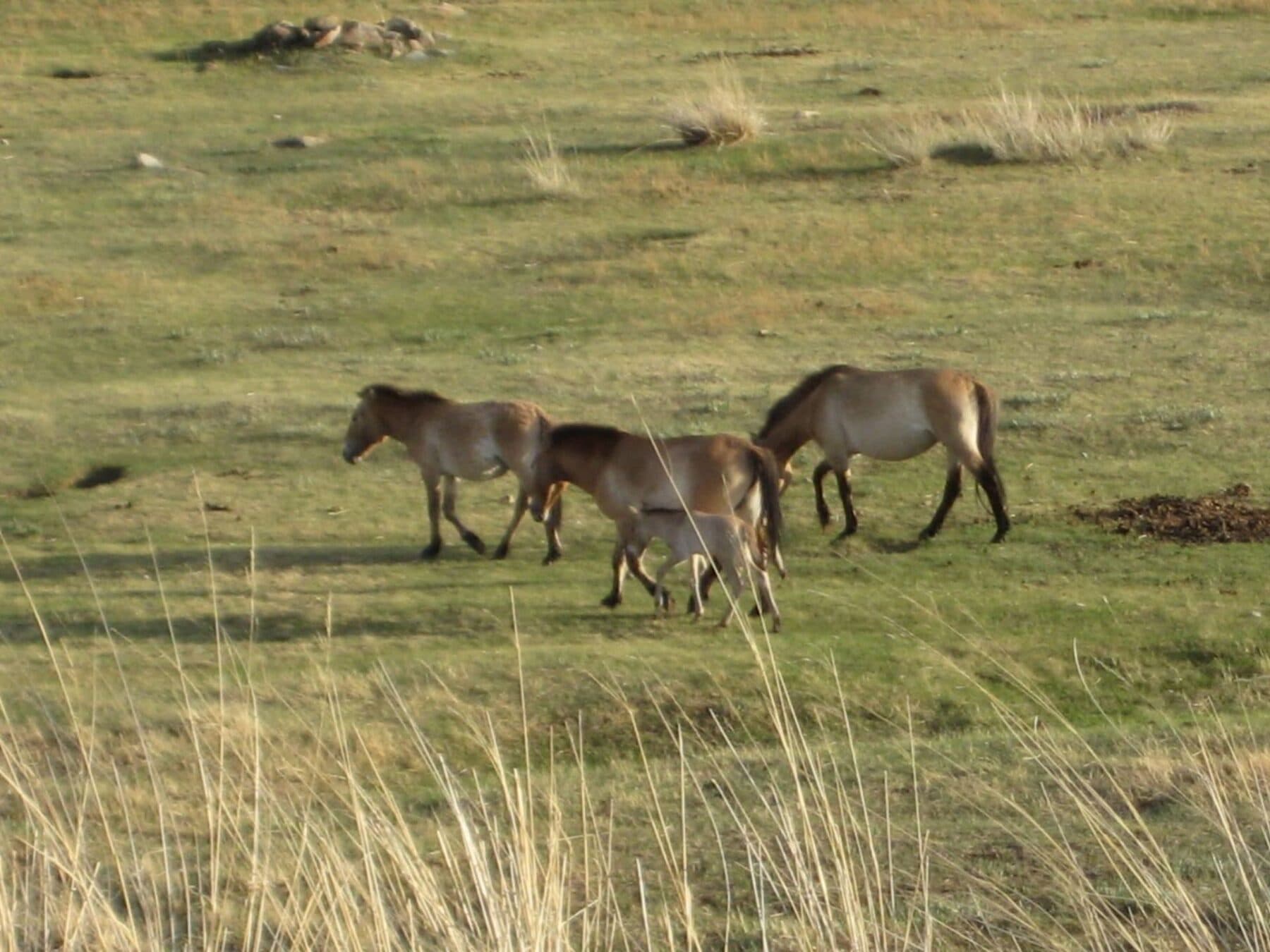
Hustai National Park, located in Tuv Province west of Ulaanbaatar, is one of Mongolia’s leading wildlife conservation destinations. The area became a nature reserve in 1993 and was upgraded to national park status in 1998. Its best-known conservation project began in 1992, when Przewalski’s horses, known locally as takhi, were returned to their native homeland after becoming extinct in the wild.
Covering approximately 50,600 hectares, Hustai protects rolling grasslands, wooded hills and forest-steppe habitats. Alongside its wildlife, the park and surrounding area preserve archaeological monuments that reflect Mongolia’s ancient past.
Highlights of a Visit
- Przewalski’s Horses: Observe endangered takhi living in free-ranging herds and learn about the international conservation efforts that made their return possible.
- Wildlife and Birdwatching: The park supports red deer, Mongolian gazelles, marmots and numerous bird species, including eagles and vultures. Sightings vary with the season and animal movements.
- Forest-Steppe Landscapes: Open valleys, mountain slopes and scattered woodland offer opportunities for nature photography and guided exploration.
- Visitor Centre: Discover the park’s ecology, conservation work and the story of the takhi reintroduction through visitor information and interpretation.
- Ancient Cultural Monuments: Archaeological sites in and around Hustai include burial mounds, deer stones and Turkic-period stone monuments dating to the sixth–eighth centuries, adding a historical dimension to a wildlife-focused visit.
On our tours: Winter Horse Riding Tour with Nomads, 9-Day Express Horse Ride, Yurt Comfort
Khugnu Khaan
About 250 km from Ulaanbaatar, on the road to Kharkhorin
Khugnu Khaan Mountain lies within Khugnu Tarna National Park in central Mongolia, where granite formations, wooded slopes, open grasslands and nearby sand dunes create a varied landscape. The area was first protected as a nature reserve in 1997 and was expanded and designated a national park in 2003.
The region combines natural scenery with the remains of historic Buddhist monasteries. Its upper and lower monastic sites preserve traces of religious life, the conflicts of the late seventeenth century and the revival of Buddhist traditions in more recent times.
Highlights of a Visit
- Khugnu Khaan Mountain: Explore distinctive granite outcrops, rocky valleys and hillside viewpoints overlooking the surrounding plains. The mountain provides a scenic setting for walking and photography.
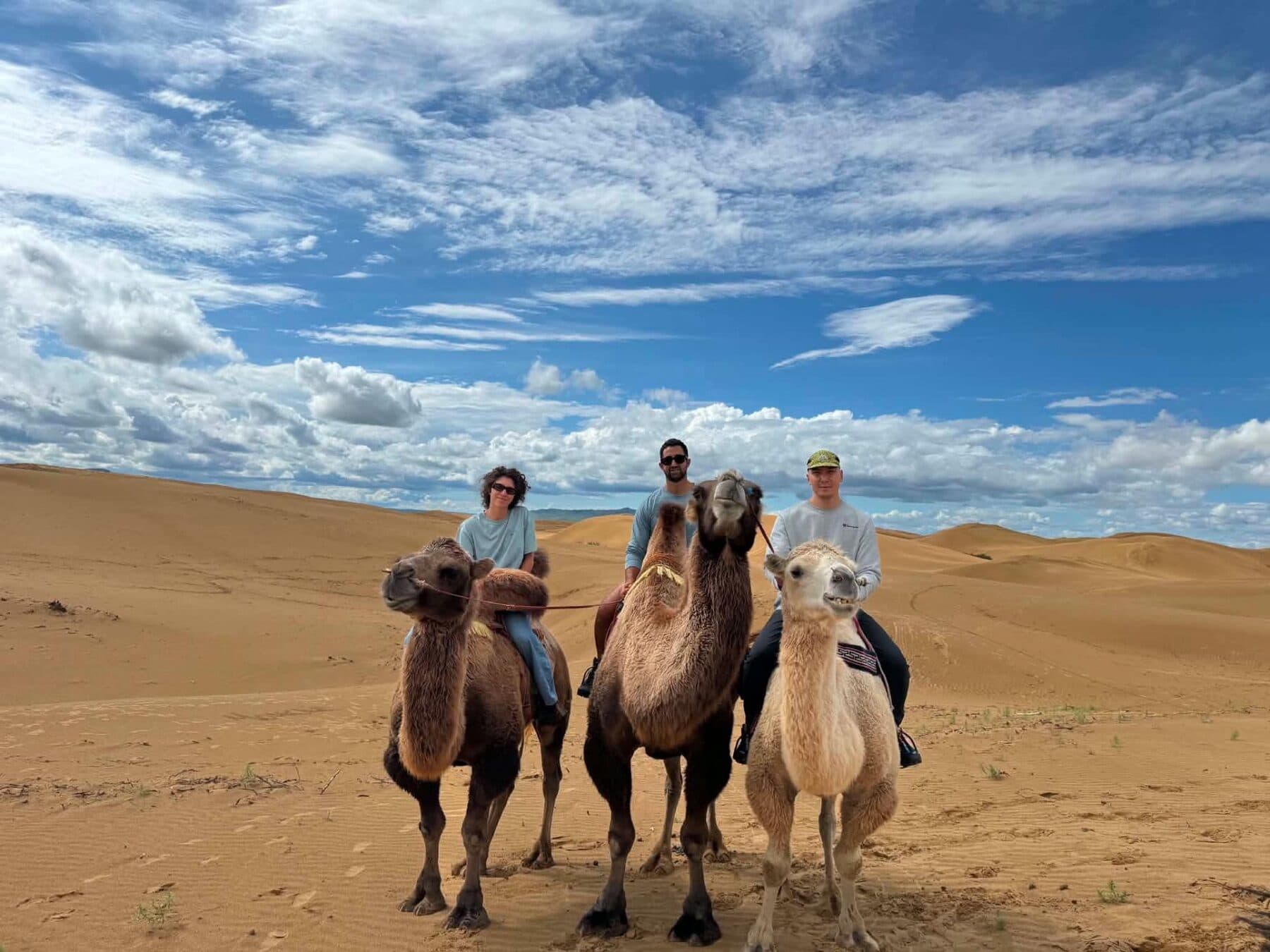
- Elsen Tasarkhai Sand Dunes: This nearby belt of dunes contrasts with the grasslands and mountain backdrop, offering visitors an accessible introduction to Mongolia’s sandy landscapes.
- Uvgun Monastery Ruins: Remnants of the upper monastery lie among the mountain’s rocky slopes. The site recalls the region’s religious history and the destruction associated with the conflicts of the late seventeenth century.
- Erdene Khamba Temples: The lower monastic complex includes temples restored during the Buddhist revival of the 1990s, providing a contrast to the older ruins above.
On our tours: Winter Horse Riding Tour with Nomads, 9-Day Express Horse Ride, Across the Orkhon Valley, Yurt Comfort, Hiking & Horse Riding
Kharkhorin
Orkhon Valley, Övörkhangai
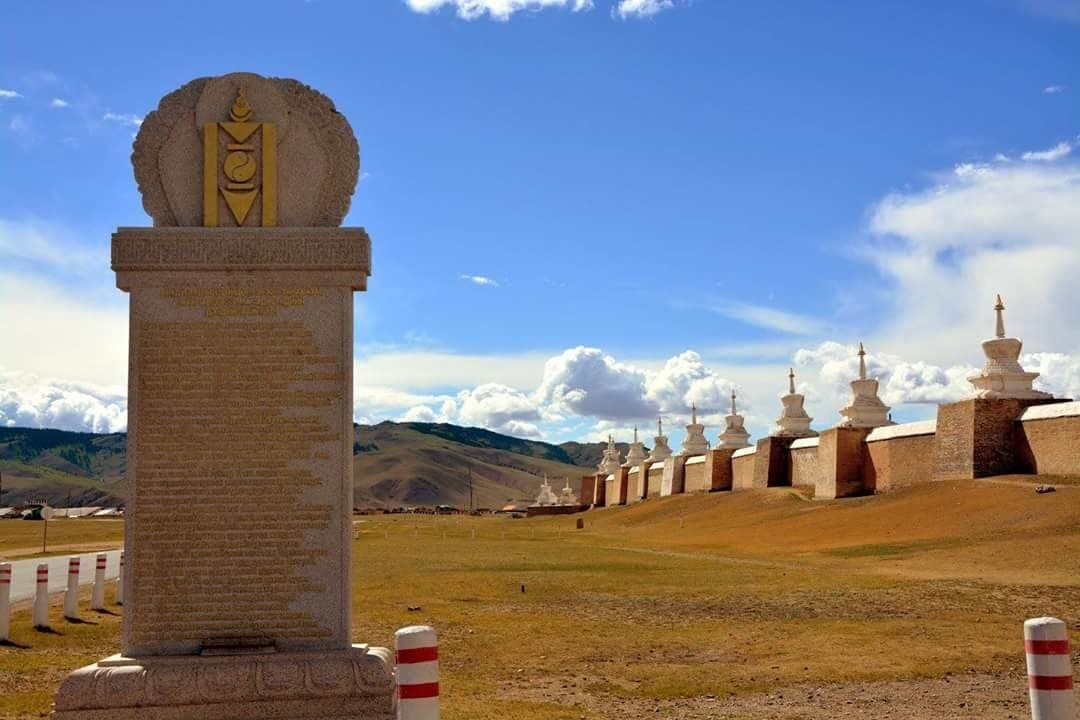
Kharkhorin, in Uvurkhangai Province, stands beside the remains of Karakorum, the historic capital of the Mongol Empire. The ancient city’s origins are traced to 1220, when Chinggis Khaan established a base in the Orkhon Valley. His son, Ogedei Khaan, developed the permanent imperial capital from 1235, creating an important centre of administration, craftsmanship, trade and religious exchange.
Today, the area brings together the archaeological heritage of the thirteenth- and fourteenth-century empire, the Buddhist architecture of later centuries and the continuing pastoral traditions of the Orkhon Valley.
Highlights of a Visit
- Erdene Zuu Monastery: Founded by Abtai Sain Khan in 1585–1586, Erdene Zuu is one of Mongolia’s oldest surviving Buddhist monasteries. Its enclosure, marked by 108 stupas, and its surviving temples introduce visitors to traditional religious architecture and Buddhist art.
- Kharkhorum Museum: Opened in 2011, the museum presents archaeological discoveries from Karakorum and the wider Orkhon Valley. Its permanent exhibition explores the Stone Age, Bronze Age, ancient states and the Great Mongol State, helping visitors understand the region’s long history.
- The Ancient City Site: Archaeological remains reveal the location of the former imperial capital. Much of the city survives below ground, with excavations and museum displays helping visitors imagine its original scale and character.
- Stone Turtle Monuments: Surviving carved stone turtles, originally used as bases for commemorative inscriptions, are among the most recognisable monuments associated with ancient Karakorum.
On our tours: Winter Horse Riding Tour with Nomads, 9-Day Express Horse Ride, Across the Orkhon Valley, Yurt Comfort, Hiking & Horse Riding
Orkhon Valley and the Orkhon Waterfall
Övörkhangai, about 360 km from Ulaanbaatar
Stretching along the foothills of the Khangai Mountains in central Mongolia, the Orkhon Valley brings together natural beauty, nomadic traditions and the history of ancient empires. For centuries, this region served as a centre of government, trade, religion and cultural exchange. Recognising its outstanding heritage, UNESCO inscribed the Orkhon Valley Cultural Landscape on the World Heritage List in 2004. Orkhon Valley National Park was established in 2006 to protect the region’s natural environment.
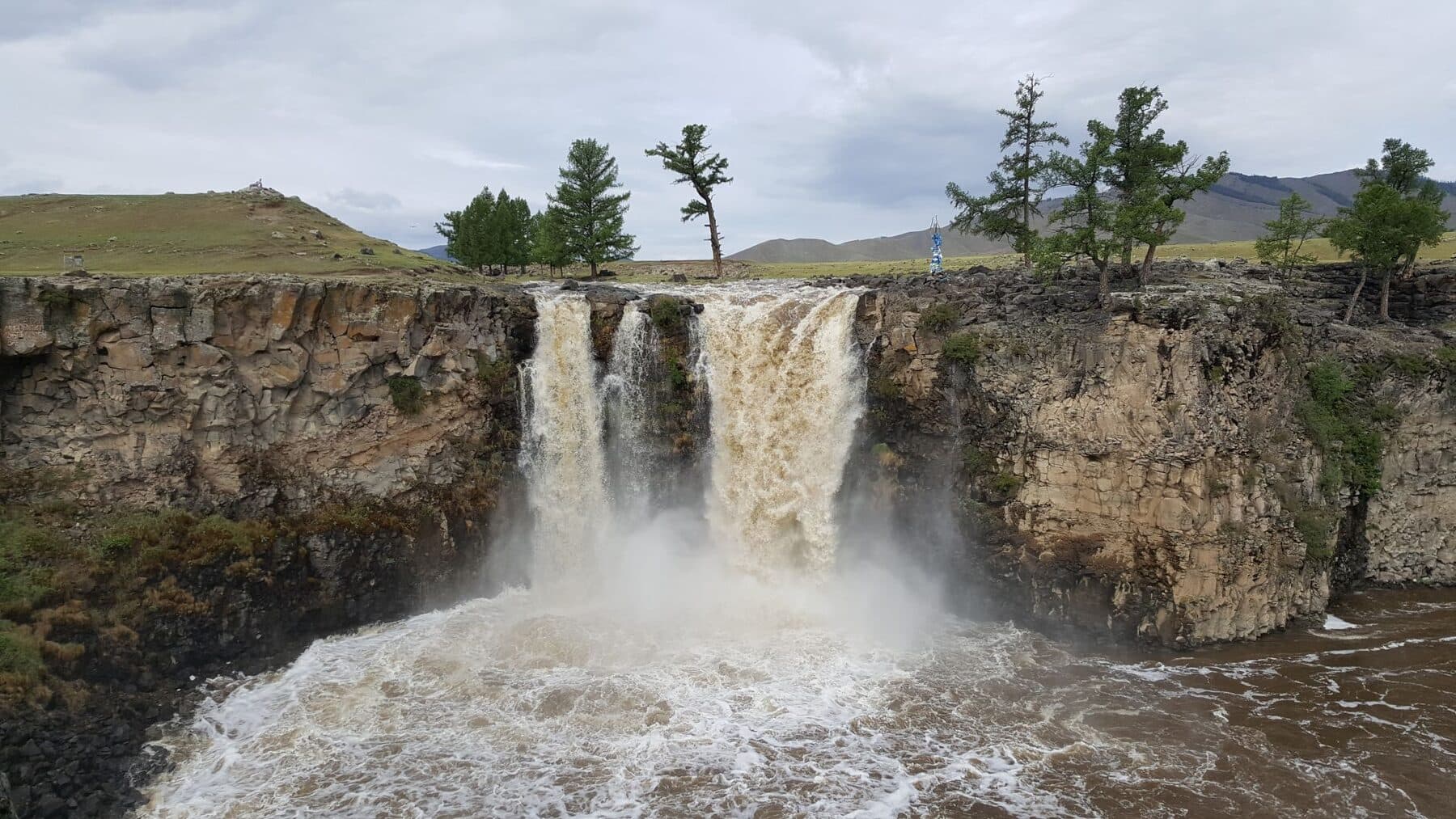
A journey through the valley can be combined with a visit to Ulaan Tsutgalan Waterfall, located in Bat-Ulzii District, Uvurkhangai Province. Mountains, river valleys, basalt cliffs and pastoral landscapes create opportunities to experience nature and cultural heritage within a single itinerary.
Highlights of a Visit
- Ulaan Tsutgalan Waterfall: Formed where the Ulaan River descends into the Orkhon River gorge, this waterfall drops approximately 24 metres. Basalt cliffs, a deep plunge pool and cascading water create one of the region’s most distinctive landscapes. Water flow varies with the season and rainfall.
- Basalt Formations and River Gorges: Ancient volcanic activity created extensive layers of basalt, while river erosion shaped the surrounding gorges. Together, these features reveal the valley’s geological history.
- Tuvkhun Monastery: Associated with the seventeenth-century spiritual leader and artist Zanabazar, this mountainside retreat combines Buddhist heritage with a striking setting among forested hills and rocky outcrops.
- Nomadic Life: Grazing herds, seasonal migrations and traditional ger dwellings reflect the pastoral culture that continues today.
On our tours: Winter Horse Riding Tour with Nomads, 9-Day Express Horse Ride, Across the Orkhon Valley, Yurt Comfort, Hiking & Horse Riding
Naiman Nuur
Khangai Mountains, Övörkhangai
Located among the Khangai Mountains in Uyanga District, Uvurkhangai Province, Khuisiin Naiman Nuur, or the Eight Lakes, is a scenic region of freshwater lakes, mountain forests, alpine meadows and volcanic formations. The lakes occupy basins shaped by ancient volcanic activity, geological fractures and land subsidence.
The area was first placed under state protection in 1992, with its natural monument classification confirmed in 1995. Surrounded by mountains and woodland, it offers a rewarding setting for travellers who wish to explore Mongolia’s landscapes on foot or horseback.
Highlights of a Visit
- Shireet Lake: The largest of the Eight Lakes lies among wooded slopes and mountain ridges. Its shoreline and elevated viewpoints offer opportunities to photograph the water and surrounding scenery.
- The Other Lakes: Routes linking lakes such as Khaliut, Bugat, Khaya and Khuisiin reveal changing shorelines, mountain backdrops and woodland landscapes.
- Mountain Forests and Meadows: Larch and other coniferous forests alternate with grassy valleys and bare mountain summits, showcasing the varied environments of the Khangai highlands.
- Traces of Ancient Volcanic Activity: Basalt formations and extinct volcanic features, including the Urt Jalgyn and Dovyn craters, provide an introduction to the geological processes that shaped the lake district.
- Walking and Horse Trekking: Some sections between the lakes cannot be reached by vehicle and are explored on foot or horseback with local guides. Routes cross mountain passes, forest trails and lakeshores, allowing visitors to experience the landscape at a slower pace.
On our tours: 9-Day Express Horse Ride, Across the Orkhon Valley, Yurt Comfort, Hiking & Horse Riding
Somewhere else in mind?
We plan private trips to any of these places, or combine them with a riding tour, on your dates and at your pace.